A solo play creates an apparent paradox. One performer stands before the audience, yet the stage can contain a crowd of voices, memories, arguments, and absent people. The concentrated form can make acts of listening part of the event.
Solo performance can include storytelling, direct address, and the embodiment of multiple characters (Wikipedia). Its economy is visible: a shift in stance may replace a set change, and a new rhythm may establish another speaker. The audience becomes an active partner because it must complete each transformation.
The actor as the scene change
In an ensemble play, character difference is immediately supported by different bodies and voices. In a solo work, difference must be made legible without becoming mechanical. Gesture, breath, focus, pace, and the imagined location of another person can all create a new presence.
The most convincing transformations are not necessarily the largest. A small realignment of the shoulders or a new relation to silence may carry more information than an elaborate accent. Precision allows the audience to recognize a speaker while keeping the performer visible as the person making the transformation.
This double awareness is central to the form. The spectator can believe in the character and remain conscious of theatrical construction at the same time. The gap creates room for reflection: why has this voice been placed beside the previous one, and what does the performer ask an audience to notice through the sequence?
Direct address and responsibility
When a character speaks outward, the audience is no longer safely invisible. A question may feel personal even when no answer is requested. A confession may turn spectators into witnesses. A joke can establish complicity before the scene reveals what that complicity costs.
Multiple-character solo work also requires ethical discrimination. Difference should emerge from specific desires, histories, and uses of language rather than a collection of easy signals. This is especially important when characters carry opposing political or cultural positions. Complexity is not the same as false balance; a portrayal can be humanly detailed without making every claim equally sound.
A resource guide from the Alliance for Jewish Theatre foregrounds authenticity and care in the creation and presentation of Jewish stories. That principle offers a useful standard for solo performance: theatrical daring works best when joined to research, specificity, and an awareness of whose experience is being represented.
A chair, a light, a whole world
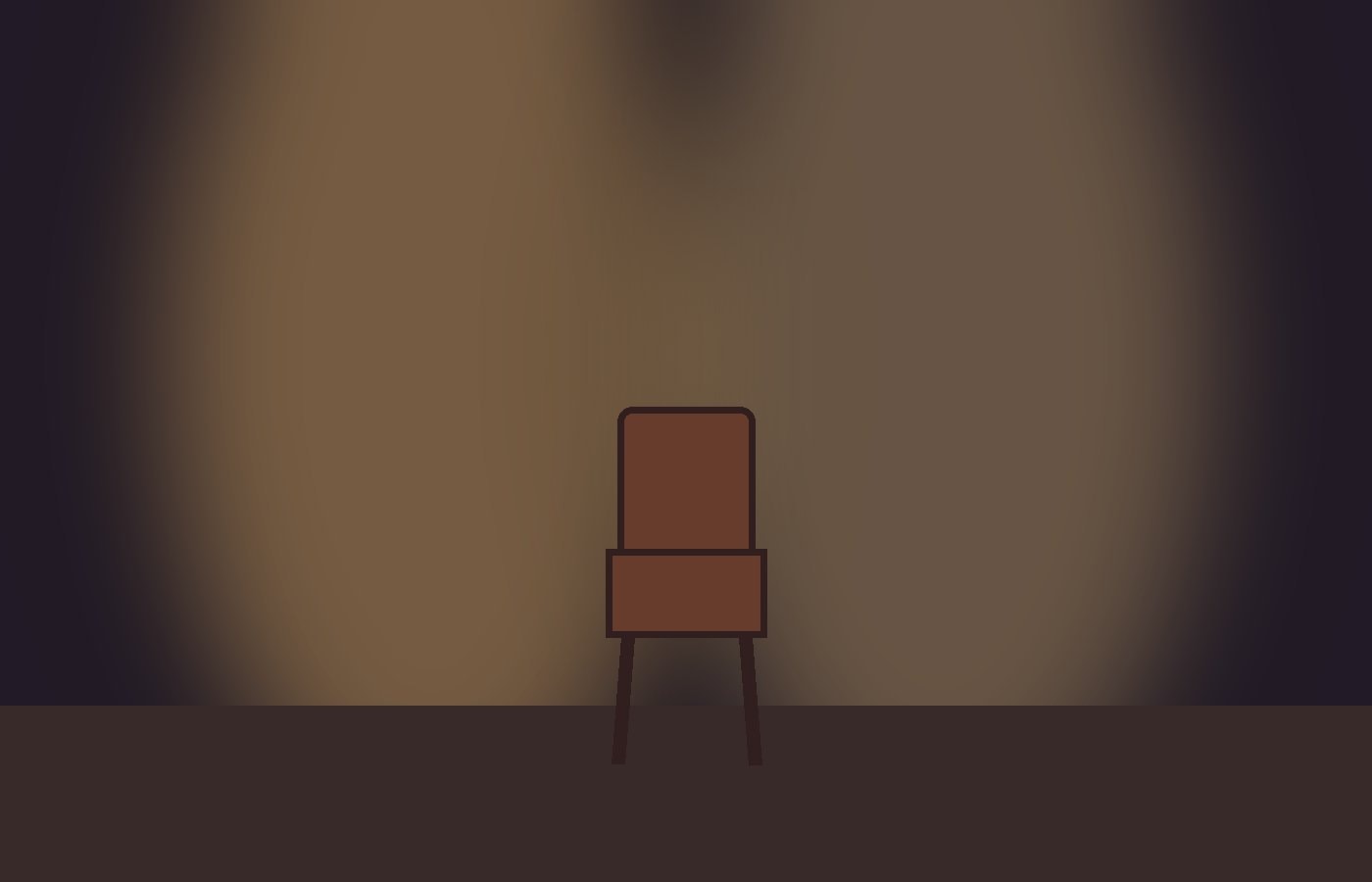
The form's limited physical means can heighten attention. A chair may be a seat, a boundary, a remembered room, or simply a chair placed under scrutiny. Light can separate public speech from private thought. Sound can carry a location without illustrating it completely.
This economy gives silence unusual weight. An ensemble can distribute attention across several actors; a solo performer holds the room even while doing nothing. A pause may register a character's hesitation, the performer's transition, or an invitation for the audience to consider what it has heard.
Solo work also makes endurance part of the event. Performance anxiety, sometimes called stage fright, can involve physical and emotional responses to appearing before others. A general account of stage fright and performance pressure (Wikipedia) offers context, but it does not reduce performance to symptoms. Training, preparation, and individual experience vary.
Placed beside other portraits
Mark St. Germain's Becoming Dr. Ruth uses one performer to cross decades of a public life. David Hare's Via Dolorosa makes the speaker's journey and act of testimony central. Martin Sherman's Rose is identified in a biographical account of its dramatist as a one-woman play. These examples show how the form can hold biography, travel, memory, and argument without requiring the same narrative method.
The physical concentration of solo work makes the performer's voice and body impossible to treat as background. Breath, focus, repeated movement, and recovery all belong to the craft as well as to the practical demands of carrying a full evening alone.
Questions for reading and performance
What marks each transition: voice, posture, spatial focus, or a change in the relationship with the audience? Which characters speak directly, and which seem overheard? Does the sequence create comparison, escalation, contradiction, or accumulation?
Ask also what remains outside the performer's range by design. A solo play is not obligated to imitate every person mentioned. An absent voice can retain force through the effect it has on the person present.
The solo form demonstrates that theatrical scale does not depend on cast size. One performer can make a public argument intimate, but intimacy brings responsibility. The form succeeds when virtuosity serves attention—attention to character, context, and the audience's changing place in the room.